Don’t look for consumers, look for passionate fans!
Updated on · By Pascal SCRIVANI
Modern marketing has left the war for attention behind and moved into a culture of legitimacy. Success now belongs to brands that stop interrupting and start inspiring. Today, nobody wants passive “consumers” any more. We want people who feel it, who stand up for the brand and who see themselves in it. We want LOVERS.
1. The sociology of “Love”: the return of the tribe
To understand LOVERS, you have to look away from your Excel spreadsheets for two minutes and take an interest in people. The sociologist Michel Maffesoli explains that we are living through the “return of the archaic”. After decades of relentless individualism, human beings have a wild urge to melt into the group and to feel things together.
This is what’s known as Neo-Tribalism. But careful: these are not the rigid tribes of old. These tribes are fluid, chosen and emotional. In the evening you are an extreme sports fan thrilled by the feats of Red Bull; in the morning you belong to the radical community campaigning for ethical fashion with Patagonia.
The insight that stings: In a world of plenty, a product’s practical function (it washes, it drives, you can eat it) has become ordinary. What counts is Linking Value (its value as a social bond). The product is just a pretext for the relationship, a totem that lets members of the tribe recognise one another. You no longer buy an object; you buy your ticket in.
2. Anatomy of a LOVER: more than an acronym, a state of mind
What sets a satisfied customer apart from a LOVER? Simple: the LOVER is irrational. They have that famous “Loyalty Beyond Reason” theorised by Kevin Roberts. To them, the brand is a partner for life rather than a supplier.
Here is a LOVER’s genetic code:
- Loyal beyond reason: They forgive your little delivery slip-ups or website bugs, because they love you.
- Positively obsessed : They lie in wait for your “drops” as if each one were the latest episode of their favourite series.
- Vocal : Your best ambassador. They run your customer service for free on Reddit and defend your honour against the “haters”.
- Engaged: They answer your surveys, vote on your next designs and feel like co-authors of your success.
- Resilient : When a crisis hits, they stick with you. They are part of the solution, not the problem.
- Sticky: They stay for the long haul. They won’t leave you for a 10% off coupon at a competitor.
Why does this matter so much? Because human beings are driven 80% by emotion. Reason leads to conclusions; emotion leads to action. If you don’t touch the heart, you will never reach the wallet for long.
3. The textbook case: when “Social Love” drives business
How do you get from sociological theory to a strategy that makes people’s hearts skip a beat? Let’s look, with a planner’s eye, at a few brands that have truly cracked social media.
Duolingo: humanising through creative chaos
How do you turn a language app into a TikTok icon? By creating a character: Duo the owl. Duolingo tore up every corporate convention by betting on absurd humour and self-mockery. By (jokingly) threatening users who skip their lesson or poking fun at viral trends, Duo has stopped being a logo and become a friend: a bit clingy, but terribly endearing. The result? A community of fans who make memes and defend the brand as if it were one of the family.
Ryanair: the art of the “Roast” and the knowing wink
Ryanair has worked out a big secret: on social media, perfection is boring. The brand has mastered the art of mocking itself and its customers on Twitter (X) and TikTok. By answering complaints about legroom or baggage fees with scathing bluntness, Ryanair builds a complicity of honesty. Its tribe loves this “unfiltered” tone, a far cry from the usual corporate political correctness. Contempt turns into tough love.
Glossier: turning customers into the faces of the brand
The Glossier empire wasn’t built on billboards but on Instagram. The strategy? User Generated Content (UGC) taken to the extreme. By reposting photos of its customers in their bathrooms on a massive scale, Glossier erased the barrier between brand and audience. Every customer becomes a potential face of the brand. You don’t follow a brand; you join an aesthetic movement where the voice of “real people” carries more weight than that of marketing experts.
4. Welcome to the “Cozy Web”: where bonds are really formed
If you’re hunting for your LOVERS in Facebook’s public, polluted news feeds, you could be hunting for a long time. The world is changing. Internet users, worn out by the toxicity of the big networks, are migrating to what experts call the “Cozy Web”.
These are semi-private spaces: Discord servers, specialist subreddits, WhatsApp groups or Telegram channels. This is where “Social Currency” changes hands. Being part of a brand’s private group means wearing an insider’s badge.
For a brand, entering the Cozy Web takes humility. You don’t stomp in wearing big advertising boots; you come in with value, exclusive content and, above all, a willingness to listen. It’s the shift from “Big Data” (how many clicks?) to “Thick Data” (why is this member so passionate?).
5. The danger: don’t fall into “Community Washing”
Careful, slippery ground! Wanting to build a community because it’s “trendy” is the surest way to trip over the rug. This is what’s known as Community Washing.
Modern consumers, and Gen Z above all, come with a built-in “bullshit” detector.
- Greenwashing: Claiming you’re saving the planet when all you’ve done is turn your logo green.
- Rainbow-washing: Bringing out a rainbow flag in June and forgetting LGBTQ+ struggles for the rest of the year.
LOVERS demand radical transparency. If you claim to be a “committed” brand like Patagonia, you have to go all the way, even if that means telling your customers: “Don’t buy this jacket if you don’t need it.” Authenticity is a condition of existence rather than a selling point. A brand that lies to its tribe doesn’t just lose customers; it gets excommunicated.
6. Why now? The collapse of attention
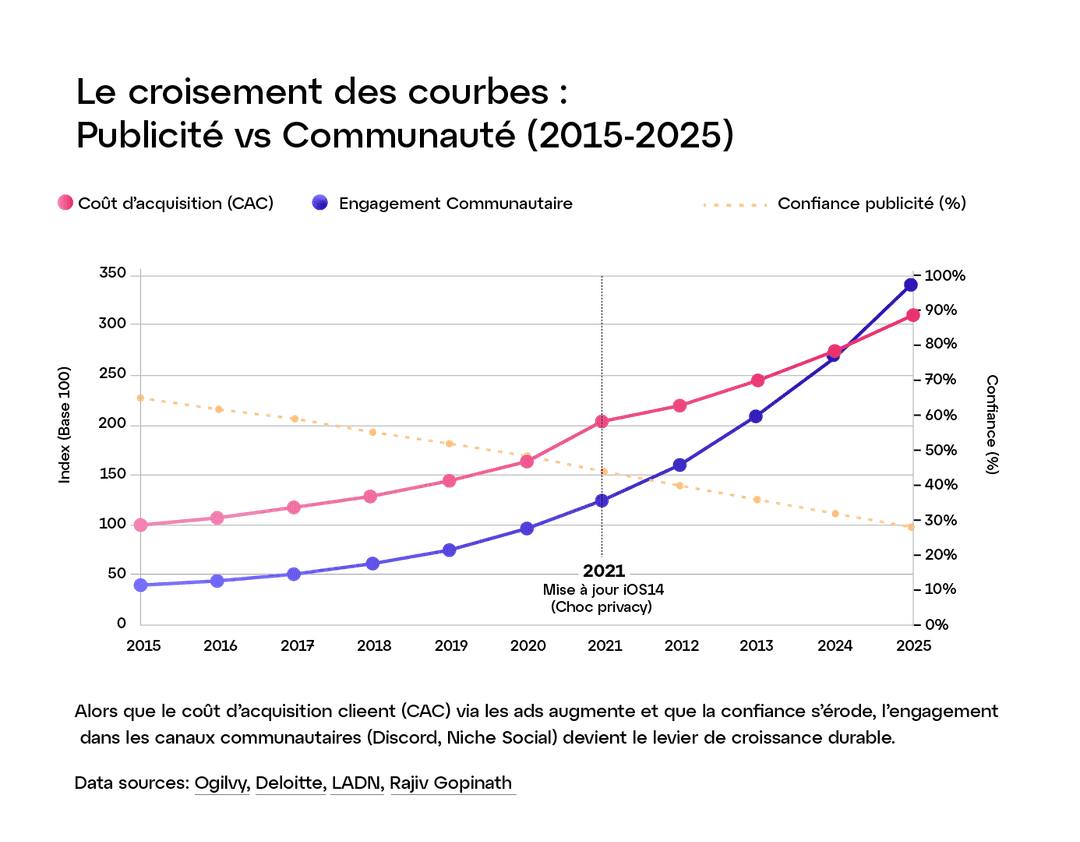
The LOVERS phenomenon is a response to a threefold crisis:
- Cognitive overload: We see up to 10,000 messages a day. Our brains are saturated. The only thing that breaks the sound barrier is a message from a friend or a community we trust.
- Soaring costs (CAC): Acquiring a new customer through advertising costs 5 to 25 times more than keeping a LOVER. Financially, community is the best shield against inflation.
- The search for meaning: In a fragmented world, the brand becomes a landmark. We no longer choose a brand for what it does, but for what it makes us become.
7. The “Flywheel” vs the “Funnel”: the new growth engine
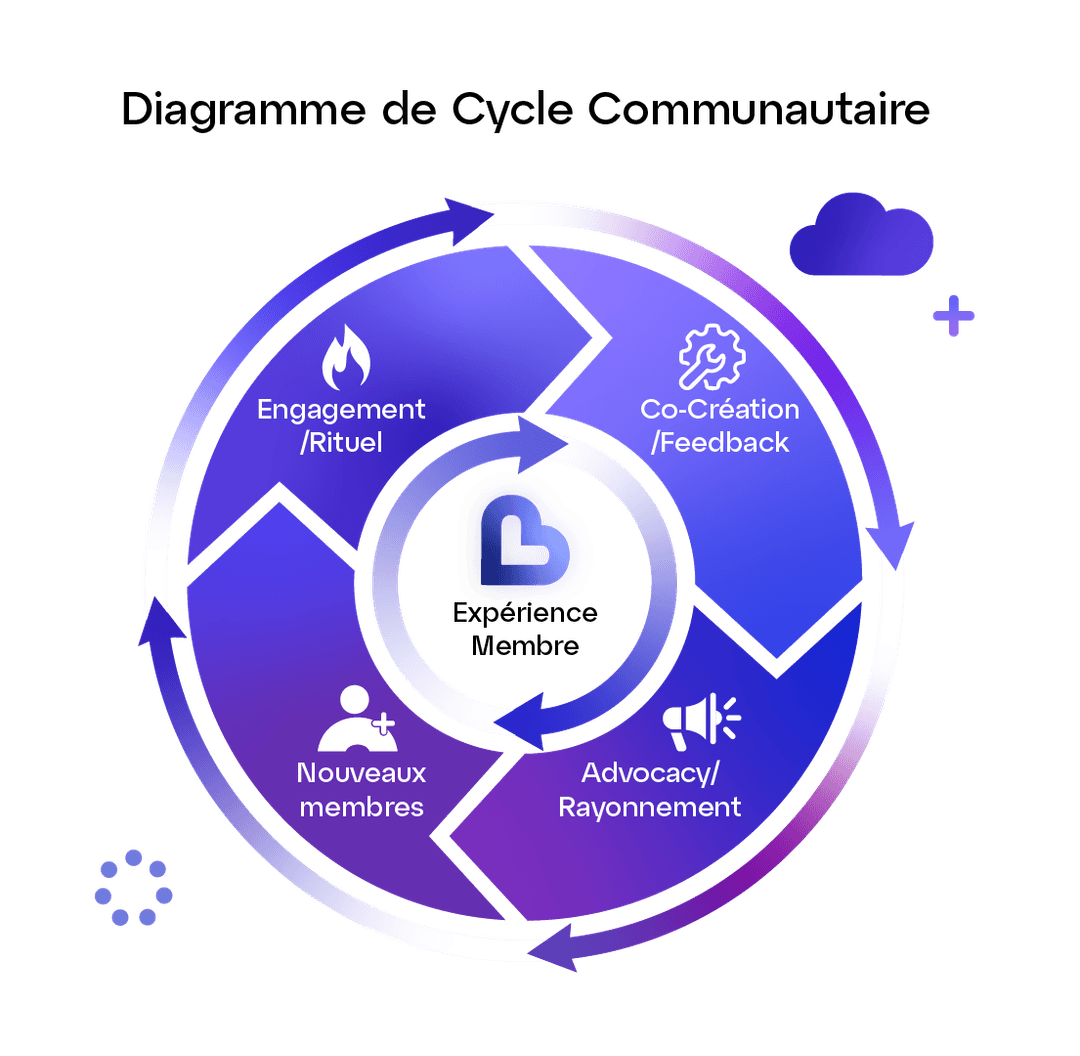
Forget the classic sales funnel, which spits the customer out once the purchase is made. Make way for the Community Flywheel.
In this model, the customer is the engine, not the end point.
- Experience: You offer an exceptional product and service.
- Ritual: You create moments where people meet (online or in person).
- Co-creation: You let the tribe take part.
- Advocacy: Your LOVERS recruit for you.
The more engaged the community, the faster the wheel spins. That’s the secret of brands like Liquid Death, which sells water with radical entertainment marketing on YouTube and Instagram and turns every can into a cult object.
8. The roadmap: how to become a Lovemark with Shakebiz
Want to turn your database into an army of fans? Here is our secret recipe in three steps:
Step 1: Find your Totem
What is the core belief that brings your customers together? Look past your product: we’re talking about a worldview. For Liquid Death, it’s “Death to Plastic”, wrapped in a punk aesthetic. What is it for your brand? We help you extract that emotional substance.
Step 2: Embody and entertain
“Give before you take”. Before asking for a purchase, give some emotion. The content has to be the product. If your TikTok or Instagram account isn’t interesting in its own right, you’ve lost. Be playful, be divisive if you have to, but never be lukewarm. Lukewarm is the graveyard of brands.
Step 3: Lose control (a little)
This is the hardest step for a business owner. To have a real community, you have to accept that members will make the brand their own. Let them create memes, let them pitch ideas. It’s this “letting go” that creates loyalty.
Conclusion: be the refuge, not the parasite
In an ocean of digital noise, the safe-haven asset is no longer gold: it’s belonging. Becoming a “LOVERS” brand means choosing the most solid strategy in the attention economy.
The future belongs to brands that can be refuges, places for conversation, creators of rituals. Brands that people don’t merely consume but are proud to show off as an extension of themselves.
At Shakebiz, we make brands’ hearts beat by building ecosystems where people and social bonds become the engine of growth once more.
So, ready for true love? Don’t let your brand be just another anonymous transaction. Become your tribe’s cultural totem. The first date starts here.