Opportunism and responsibility: the two sides of a content strategy
Updated on · By Pascal SCRIVANI

A news story breaks. Within minutes, marketing teams are wondering whether to react. Some brands publish a clever visual within the hour; others have spent months preparing a guide that people will keep consulting for years. Both are doing content strategy. They simply sit at opposite ends of the same spectrum, which runs from mischievous opportunism to considered responsibility.
What is a content strategy for?
Deciding what the brand says, to whom, in what form, how often, and why. With audiences awash with content, content strategy is essential: every message has to find its place between the algorithms, people's attention, the news and customer expectations. The brand has to communicate in the moment to grab attention, and over time to hold on to it.
Snack content or slow content: what's the difference?
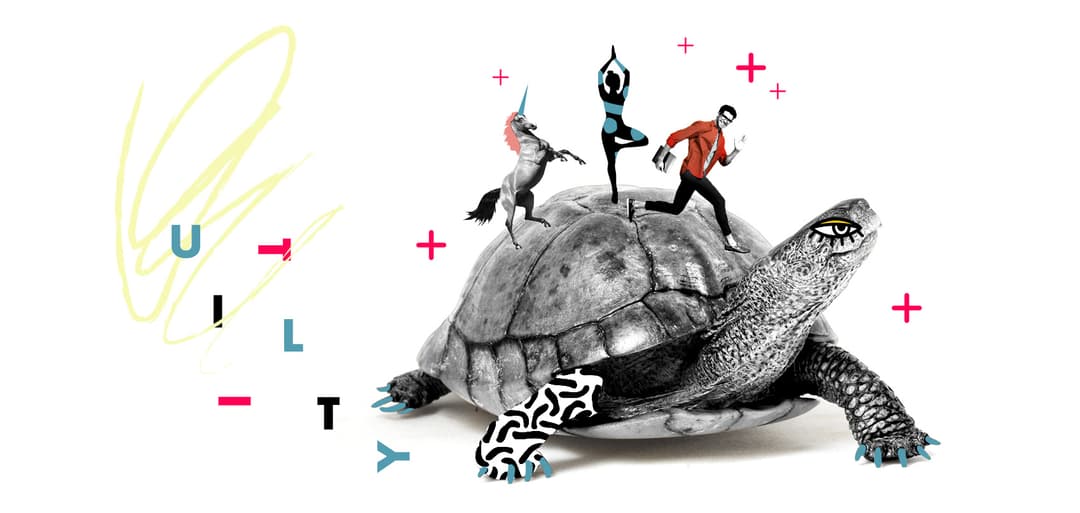
Snack content means short-lived content that is consumed quickly, like a sweet you gulp down before throwing away the wrapper: a short video, a meme, a poll, an off-the-cuff reaction. Slow content plays the long game. It is editorialised, longer, more nourishing and published at a slower pace: a guide, a study, a documentary series, an in-depth article.
Snack content keeps the community going and livens it up with little effort. Hashtags, stickers, polls invite interaction and make it an ideal way in. Slow content gives the brand its footing: it explains, reassures, and keeps being found long after it was published. One draws people in, the other keeps them.

The line is blurring as formats multiply. A short video can open onto a full feature; an in-depth article can feed ten posts. What matters is less the format than the nature of the content, and what it says about the brand.
When should a brand react to the news?
When it has legitimacy on the subject, a tone that suits the event and an organisation able to publish fast. Reacting in the moment creates a sense of complicity: the brand shows that it lives at the same pace as its audience.
The ads of Sixt, the car rental company, are a case in point. Hooked onto the news and cheeky, they only last as long as the story, yet they do a great deal for the brand's image. In February 2011, the tourism trade publication TourMaG was already noting that it was not the first time Sixt had given the news a humorous twist. On 28 June 2018, after Germany was knocked out of the World Cup, the brand posted a visual in the colours of the German flag on Facebook, Twitter and LinkedIn: “Dear Mannschaft fans, console yourselves with a German selection that really holds the road. Rent our BMWs on sixt.fr”. A German brand teasing its own team: the wink works because it hurts no one. After so many of them, people now expect the brand to bounce back whenever something happens.
The calendar also serves up ready-made occasions: the sprig of lily of the valley on 1 May, the galette des rois (the Epiphany king cake), la rentrée (the September return to work and school). They are easy to seize, and that is their limit, since everyone seizes them. The right moment wins attention. A distinctive point of view wins a place in people's memory.
Where does opportunism end?
At the point where the brand uses an event instead of serving its audience. A tragedy, a crisis, a cause: the ground gets slippery as soon as the news involves people. A post can be deleted; the screenshots stay. Before reacting, five questions will steer you clear of most missteps.
- What links the brand to the subject? Without legitimacy, the reaction looks like a cynical grab.
- Who might feel targeted or hurt? Humour that works takes aim at a situation, rarely at people.
- Does the brand practise what it preaches? A committed message can be checked in a few clicks, and internet users will happily do the checking.
- Who signs off, and how quickly? Responsiveness is prepared in calmer times, with a short approval process agreed in advance.
- Will the message still stand up in six months? Content stays findable long after the event that sparked it.
How do you reconcile responsiveness and responsibility?
By building the slow content first, then leaving room for snack content. In-depth content forms the backbone of the editorial calendar: it says what the brand knows and what it stands for. Hot takes hook onto it, and each one can point back to that foundation. It is also the natural home of brand utility: a brand that is useful to its audiences always has a legitimate reason to speak up.
Data helps set the dial. Search volumes, questions asked in the comments, related topics, user journeys, content published by the community: these signals reveal what audiences expect in substance, and the right vocabulary in form. They show which subjects deserve a lasting feature, and which only call for a wink.
A brand that reacts to everything ends up saying nothing. A brand that never reacts ends up no longer being heard. Between the two, you need a clear editorial line, and someone who knows how to say no.