The metamorphosis of retail in the digital age (part 2): the levers
Updated on · By Pascal SCRIVANI
Before pushing open a shop door, we have often already compared prices, read the reviews and sometimes checked the stock on our phones. This habit of researching online to buy in store is called the ROPO effect (Research Online, Purchase Offline); showrooming is its mirror image. The first part of this series took stock of the situation: online retail growing more slowly, and physical shops getting fewer visitors yet still in the majority. That leaves the practical question. How do you get the website working for the shop, and the shop working for the website?
Which lever should you pull first?
The one that answers the question your customers ask most often before they come in. Ask your sales staff, reread the messages you receive, look at what people search for on your website. The answer will steer your choice.
- “Do you have it?” Stock visible online and reservations come first.
- “Where are you, and how late are you open?” Local search is your project.
- “Why come to you?” The in-store experience, and content that makes people want to make the trip.
- “Is it cheaper elsewhere?” Consistent pricing across channels, and the services a website alone can’t provide.
Better one lever handled well than four launched at once and abandoned after six months.
Click and collect: what’s in it for a shop?
It brings into the shop a customer who has already made up their mind. Collecting in store saves them fees and a wait for delivery, and gives the retailer a visit they would never otherwise have had. This web-to-store model, from website to shop, makes the website a complement to the shop rather than a rival.
It only works under three conditions. First, reliable stock: an order announced as ready that isn’t will cost you a customer. Second, fast collection, with a clearly signed counter or lockers, so nobody queues behind the Saturday shoppers. Third, a proper welcome. The customer coming to pick up their parcel is the easiest person to advise all day: they’re there, they trust you, and they may have forgotten something.
Reserving without paying rounds off the set-up for products people want to see before committing. The other way round, ordering in store an item that isn’t on the shelf saves you sending the customer off to an online competitor.
How do you get found by customers nearby?
By looking after your business profile and your products in local results. Google states that its local results are based mainly on relevance, distance and the prominence of the business, fed in particular by reviews. So the levers are concrete: complete information, up-to-date opening hours including bank holidays, real photos of the shop, replies to reviews.
One step further, show your shops’ stock where people are searching: on your website, and in Google, whose Merchant Center tool offers free local listings and local inventory ads in France. It’s the direct answer to the question “do you have it?”.
Geotargeted advertising: how far should you go?
As far as your catchment area, and no further than what the customer has agreed to. There are two very different uses. The first is running a campaign within a radius around the shop, on search engines or social networks: the platforms handle the targeting, and the message stays local. The second tries to identify customers through their phone’s location, for example to send a notification when they walk past the shop.
This second use is regulated. The CNIL (Commission nationale de l’informatique et des libertés, France’s data protection authority) points out that consent is required to use location data that isn’t essential to the service, which covers advertising in particular. Even with that consent, precision and retention periods must be kept to what is necessary. A well-timed notification is helpful once; repeat it and the app gets uninstalled.
What should a connected shop offer?
Tools that serve the sales assistant and the customer before they serve the shop window. The strategy of these connected shops boils down to a few simple uses.
A well-informed sales assistant. Stock in other shops, purchase history for customers who agree to it, ordering straight from the shop floor: the sales assistant’s tablet does more for sales than a giant screen at the entrance.
Stock in the right place. Predictive analysis of sales, shop by shop, helps put the right product in the right place before demand peaks. It’s the least spectacular use of artificial intelligence in retail, and often one of the most useful.
Product in hand. The shop keeps a decisive advantage: you can touch the product, try it, compare it side by side with another. Digital tools should extend that advantage, with a product page you can pull up on the shop floor or a virtual try-on for whatever isn’t in stock.
Why put care into the in-store experience?
Because that’s what gives people a reason to make the trip. A workshop, a meet-up, a window display that changes, a corner where you feel like taking a photo: these moments also feed social media. Photogenic places get shared by the people who visit them, and the shop travels far beyond its own street.
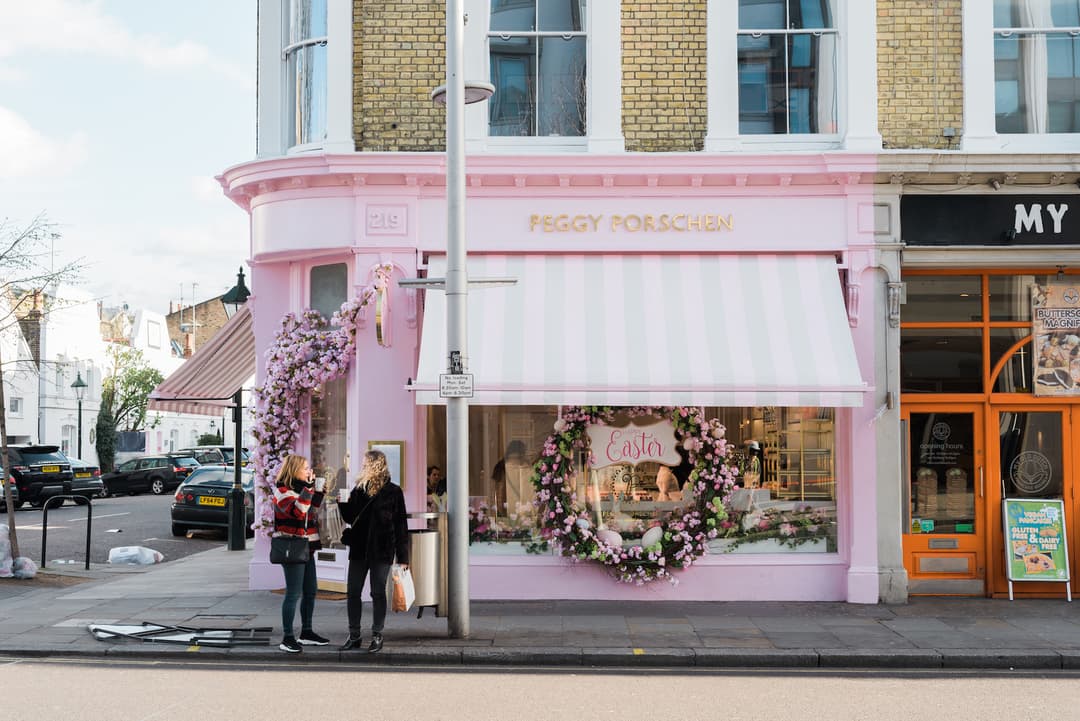
The link works both ways. Social shopping lets people discover a product on social media before coming to see it in real life, and content filmed in store makes people want to drop by. For Nicetoile, the shopping centre in the heart of Nice, we come up with editorial concepts that showcase its shops and restaurants, with an explicit goal: supporting footfall at the centre.
Half the journey now happens before anyone walks in. It’s up to the shop to cover the other half, and to make people want to come back for no particular reason.